All Saints Orthodox Church near St Louis is hosting a conference entitled "Living the Christian Faith in the Orthodox Western Tradition."
This conference is designed for those who are interested in Orthodoxy, yet within its western liturgical expression. Those who are already Orthodox are also welcome to attend.
27 October 2009

Could He Have Nothing to Say??
This blog has been silent for some time. It is not because I've had nothing to say. My wife, children, parishioners and students will dispute that I'm ever at a loss for words.
Several factors have led to this "season of silence"; most especially my circumstances, which have left me busier than usual. Hopefully, I've become more adept at managing these circumstances (in other words, I've finally stumbled upon a routine) that may allow me to continue to share my thoughts.
Therefore, I shall attempt to do so beginning with my next post which, alas, is crass advertisement. Perhaps it may interest some.
Several factors have led to this "season of silence"; most especially my circumstances, which have left me busier than usual. Hopefully, I've become more adept at managing these circumstances (in other words, I've finally stumbled upon a routine) that may allow me to continue to share my thoughts.
Therefore, I shall attempt to do so beginning with my next post which, alas, is crass advertisement. Perhaps it may interest some.
30 May 2009
Visit by Bishop MARK
On May 16-17, His Grace Bishop MARK made his canonical visit to Holy Incarnation Orthodox Church. Here are photos from that visit.
For more visit, click here.
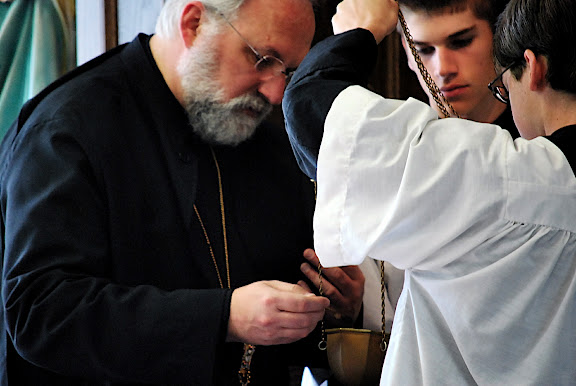 Blessing the Incense
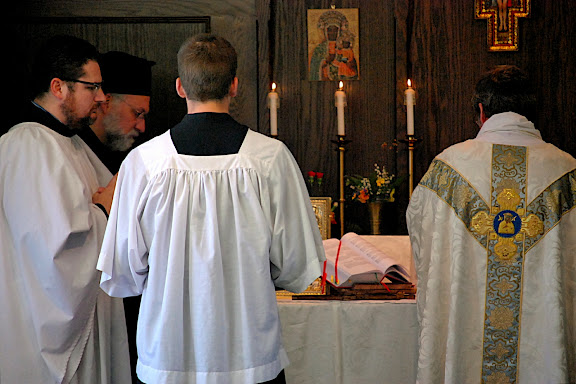 At the Canon
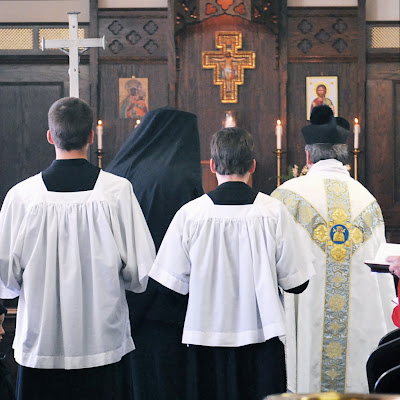 Ready to Depart
 Incensing the Faithful
 Preaching the Homily
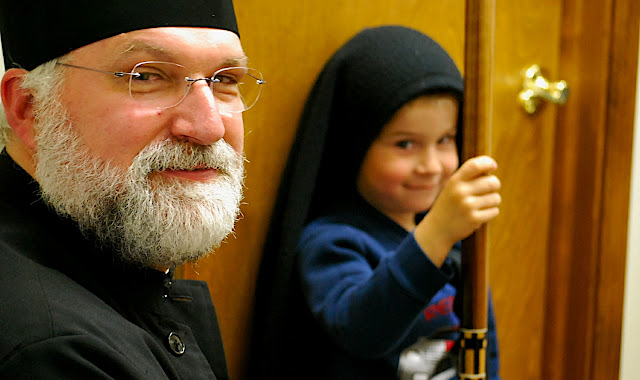 Bishop MARK with "bishop James."
For more visit, click here.
Blessing the IncenseAt the CanonReady to DepartIncensing the FaithfulPreaching the HomilyBishop MARK with "bishop James."23 April 2009
Surety -- How can I know?
Recently a Lutheran acquaintance wondered about the Orthodox understanding of the certainty of salvation. Like many looking into Orthodoxy, this person did not find much of an answer to the question, "How can I be sure that I am saved."
Too often I've heard such a well-meaning question dismissed with the words like these: "That's not the right question." Such a frustratingly typical answer which is often taken to belittle both the questioner and a well-meaning, searching question!
What needs to be understood is that the question is driven by Luther's question ("How do I know that I have a gracious God"). The prominence of this individual quest by Luther has prompted Lutherans and Protestants to place a great deal of stock in the surety of faith. As one who has was schooled by the question and so understands the angst behind it, permit me to suggest that it reveals a need to be convinced that God is merciful, that He loves men as they are, and that regardless of what they've done or their past He accepts, welcomes and forgives them.
There is nothing in those words that the Orthodox dispute. The Orthodox agree that God is merciful, forgiving, kind, and loving, and that we need constantly to be reminded of this since we are prone to forget it or live as if it doesn't matter.
However, we would question why one needs to know for certain that which is a given; namely, that God is gracious, merciful, loving, etc. We would wonder how God could be otherwise since God is (i.e., both essentially and energetically; or metaphysically, epistemologically and experientially) love.
We would also wonder at the hubris of such a question. In other words, the focus of the question is on me (the individual) and my surety rather than on God and His grace. Notice the grammar: How can *I* be certain that God is who He is. Deep down, it seems to suggest that God is gracious only if I find Him to be so. Such a Cartesian method plays well in a post-Renaissance mindset but it, at base, quite prideful and not within the "mind of Christ" (Philippians 2).
Above all, however, we would question what is not said; namely, that this emphasis on the surety of faith quickly leads either to an antinomianism or to an abstraction (or both), and away from the primary narrative in Scripture--that the love God is calls us not to nearness or friendship but to an intimate participation and union; that God invites us to be "wrapped up" in Him (i.e., in the love His gives and does but, of course, not the love that he metaphysically is).
To the first (antinomianism), Luther of course emphasized "faith alone, but faith is never alone." This emphasis of faith and love is seen most clearly in Luther's sermons. However, the most unLutheran notion of total depravity (if not in so many words) has captivated Lutherans and Lutheranism to the point that they apologize for or downplay the necessity for works of love. Furthermore, when these works of love are emphasized, the key works of repentance and humility are not seen as works of love, and are not often seen as the key works.
To the second (faith as abstraction), we would wonder why justification (which is, as Lutherans properly teach, the work of Christ) becomes greater than Christ; to the extent that some would vociferously maintain that not Christ but Christ's justifying work is the chief article (Hauptartikel). The two, we would say, cannot and ought never be separated since the person (hypostasis; essence) cannot be understood apart from His work (energon; deeds), and vice versa. We would maintain that the loss, in late medieval Western theology, of the distinction in one person/nature of essence and energy has led to this abstract understanding of faith in grace. (Note the grammar of the formula: justified by grace through faith--where is God or Christ except as an understood modifier, and all the other words are abstract concepts!) We would further point out that this loss is the result of a de-emphasizing (or, to be precise, a de-personalizing) of the Spirit.
It is precisely the person of the Holy Spirit that Orthodoxy points to as the necessity for the binding together of individuals in love to God and one another. And what is key, then, is not personal surety of one's standing before God, but the relationship that the Spirit calls us to--a relationship of the fullness of love in the God who is love which then, of necessity, binds us to all whom (persons) and which (creation) God loves. Or, to ask it juridically: After one is declared not guilty or righteous (or "made righteous" as the Lutherans sometimes affirm), then what? Does that not evoke a relationship between judge and judged? And if so, what is the nature of this relationship, and what keeps is growing, maturing, deepening? The Orthodox answer, which is only partially (and therefore incompletely, that is, unsacramentally) found amongst the pietists or those oddly accused of Osianderism (often the accusers don't understand the teaching of and charges against Osiander), we would see as an attempt to answer this very necessary relational question. And why is the relational question necessary? Because that is what God made us for--to live in union with Him. But now we are talking of theosis.
Too often I've heard such a well-meaning question dismissed with the words like these: "That's not the right question." Such a frustratingly typical answer which is often taken to belittle both the questioner and a well-meaning, searching question!
What needs to be understood is that the question is driven by Luther's question ("How do I know that I have a gracious God"). The prominence of this individual quest by Luther has prompted Lutherans and Protestants to place a great deal of stock in the surety of faith. As one who has was schooled by the question and so understands the angst behind it, permit me to suggest that it reveals a need to be convinced that God is merciful, that He loves men as they are, and that regardless of what they've done or their past He accepts, welcomes and forgives them.
There is nothing in those words that the Orthodox dispute. The Orthodox agree that God is merciful, forgiving, kind, and loving, and that we need constantly to be reminded of this since we are prone to forget it or live as if it doesn't matter.
However, we would question why one needs to know for certain that which is a given; namely, that God is gracious, merciful, loving, etc. We would wonder how God could be otherwise since God is (i.e., both essentially and energetically; or metaphysically, epistemologically and experientially) love.
We would also wonder at the hubris of such a question. In other words, the focus of the question is on me (the individual) and my surety rather than on God and His grace. Notice the grammar: How can *I* be certain that God is who He is. Deep down, it seems to suggest that God is gracious only if I find Him to be so. Such a Cartesian method plays well in a post-Renaissance mindset but it, at base, quite prideful and not within the "mind of Christ" (Philippians 2).
Above all, however, we would question what is not said; namely, that this emphasis on the surety of faith quickly leads either to an antinomianism or to an abstraction (or both), and away from the primary narrative in Scripture--that the love God is calls us not to nearness or friendship but to an intimate participation and union; that God invites us to be "wrapped up" in Him (i.e., in the love His gives and does but, of course, not the love that he metaphysically is).
To the first (antinomianism), Luther of course emphasized "faith alone, but faith is never alone." This emphasis of faith and love is seen most clearly in Luther's sermons. However, the most unLutheran notion of total depravity (if not in so many words) has captivated Lutherans and Lutheranism to the point that they apologize for or downplay the necessity for works of love. Furthermore, when these works of love are emphasized, the key works of repentance and humility are not seen as works of love, and are not often seen as the key works.
To the second (faith as abstraction), we would wonder why justification (which is, as Lutherans properly teach, the work of Christ) becomes greater than Christ; to the extent that some would vociferously maintain that not Christ but Christ's justifying work is the chief article (Hauptartikel). The two, we would say, cannot and ought never be separated since the person (hypostasis; essence) cannot be understood apart from His work (energon; deeds), and vice versa. We would maintain that the loss, in late medieval Western theology, of the distinction in one person/nature of essence and energy has led to this abstract understanding of faith in grace. (Note the grammar of the formula: justified by grace through faith--where is God or Christ except as an understood modifier, and all the other words are abstract concepts!) We would further point out that this loss is the result of a de-emphasizing (or, to be precise, a de-personalizing) of the Spirit.
It is precisely the person of the Holy Spirit that Orthodoxy points to as the necessity for the binding together of individuals in love to God and one another. And what is key, then, is not personal surety of one's standing before God, but the relationship that the Spirit calls us to--a relationship of the fullness of love in the God who is love which then, of necessity, binds us to all whom (persons) and which (creation) God loves. Or, to ask it juridically: After one is declared not guilty or righteous (or "made righteous" as the Lutherans sometimes affirm), then what? Does that not evoke a relationship between judge and judged? And if so, what is the nature of this relationship, and what keeps is growing, maturing, deepening? The Orthodox answer, which is only partially (and therefore incompletely, that is, unsacramentally) found amongst the pietists or those oddly accused of Osianderism (often the accusers don't understand the teaching of and charges against Osiander), we would see as an attempt to answer this very necessary relational question. And why is the relational question necessary? Because that is what God made us for--to live in union with Him. But now we are talking of theosis.
05 April 2009
The Courage to Confess
The following is an except of a sermon preached at the pan Orthodox Vespers hosted by St Thomas Albanian Orthodox Church in Farmington Hills MI.
What keeps us from going to confession? What causes us to put off going to our spiritual father? Is it the belief that we have nothing to confess? Or is it rather our fear that Our Lord God does not understand, that He can’t identify, that He doesn’t really know what it’s like? In other words, we’ll confess—but to someone who really doesn’t know us, and what we face, and how hard it is. Now if we could just find someone like that—someone who truly understands, and has been there, and can sympathize with us.
Yet that is precisely who St Mary of Egypt found—a sympathetic ear; and more than a sympathetic ear. She found the Lord and God who had been there and back; who knew her sin not intellectually but also experientially. And St Mary found the Son of Man who had endured her temptations, and so was able to help her—all all men—who are tempted. And when she found Him, she received courage—the courage to confess.
Now isn’t that what confession is? Isn’t confession the courage to name our sins aloud, and also the courage to live against our ungodly desires? For it certainly takes courage to confess. And it certainly takes courage to live for others and against we selfishly pleases us. Yet where does such courage come from? Certainly not from the commandments. The commandments are good, but ultimately they show us that we’ve missed the mark; that we don’t measure up. And they show us how we should live. The commandments encourage us to do what is right, but they don’t give us courage.
Where then do we get the courage to confess? It comes from Our Lord Himself, who gives us His Spirit so that we might begin to know and believe that He will not turn us away—because He’s suffered our temptations.
Remember St Gregory’s words: “What Christ did not take into Himself He did not heal, but what is united with God is also being saved.”
These words mean that Our Lord has truly and really assumed and taken into Himself—into His life-giving flesh and blood—our temptations: our desire to control, our desire to satisfy our urges, our desire to accumulate, our desire to lash out, our desire to want what others have, our desire to feed our appetites, and our desire to lose heart and give up and give in to our fears.
All of these deadly sins, all of these ungodly passions and desires, Our Lord has both assumed and consumed. He has made them His own and swallowed them up in His person. He doesn’t just know about them. He took them in and suffered their sting, and then put them to death in His flesh. And He has done this for only one reason: so that He might transform and convert these ungodly passions, so that He might change them into godly desires—the godly desires which transform us.
Read the full sermon.
What keeps us from going to confession? What causes us to put off going to our spiritual father? Is it the belief that we have nothing to confess? Or is it rather our fear that Our Lord God does not understand, that He can’t identify, that He doesn’t really know what it’s like? In other words, we’ll confess—but to someone who really doesn’t know us, and what we face, and how hard it is. Now if we could just find someone like that—someone who truly understands, and has been there, and can sympathize with us.
Yet that is precisely who St Mary of Egypt found—a sympathetic ear; and more than a sympathetic ear. She found the Lord and God who had been there and back; who knew her sin not intellectually but also experientially. And St Mary found the Son of Man who had endured her temptations, and so was able to help her—all all men—who are tempted. And when she found Him, she received courage—the courage to confess.
Now isn’t that what confession is? Isn’t confession the courage to name our sins aloud, and also the courage to live against our ungodly desires? For it certainly takes courage to confess. And it certainly takes courage to live for others and against we selfishly pleases us. Yet where does such courage come from? Certainly not from the commandments. The commandments are good, but ultimately they show us that we’ve missed the mark; that we don’t measure up. And they show us how we should live. The commandments encourage us to do what is right, but they don’t give us courage.
Where then do we get the courage to confess? It comes from Our Lord Himself, who gives us His Spirit so that we might begin to know and believe that He will not turn us away—because He’s suffered our temptations.
Remember St Gregory’s words: “What Christ did not take into Himself He did not heal, but what is united with God is also being saved.”
These words mean that Our Lord has truly and really assumed and taken into Himself—into His life-giving flesh and blood—our temptations: our desire to control, our desire to satisfy our urges, our desire to accumulate, our desire to lash out, our desire to want what others have, our desire to feed our appetites, and our desire to lose heart and give up and give in to our fears.
All of these deadly sins, all of these ungodly passions and desires, Our Lord has both assumed and consumed. He has made them His own and swallowed them up in His person. He doesn’t just know about them. He took them in and suffered their sting, and then put them to death in His flesh. And He has done this for only one reason: so that He might transform and convert these ungodly passions, so that He might change them into godly desires—the godly desires which transform us.
Read the full sermon.
01 April 2009
Thoughts on Striving Against Temptation
During Lent, especially as we struggle to keep the fast physically (in foods) and spiritually (in prayer) and relationally (in acts of love toward others), the devil often besets us with our foulest deeds and imaginations. He does so to detract us, to discourage us and to steal our joy. Yet these temptations, for which we often fall prey, are nothing. They are, literally, bundles of no-things. They are thoughts and images (often, very vivid, too vivid), but they have no sustainable reality apart from our will to entertain them, toy with them and (God forbid) act upon them.
Because these maddening temptations are “no-things” does not mean that their pull is not strong, or even seemingly impossible to resist. Black holes and vacuums, both of which contain nothing, are very powerful forces in nature. But by God’s grace through prayer and fasting—in other words, by staying the Lenten course—we can overcome. Perhaps not immediately; in fact, usually only after years of striving do we obtain the victory. For the devil is persistent in his goal of dragging us to hell; and our flesh is equally stubborn in its ungodly desire to be gratified. Nevertheless, these “strong men” have been undone by the stronger man (Lk 11). Therefore, we need simply to remain close to him in prayer and deed, and flee to him when we stumble and when we fall for the devilish lies that the “no-things” are real.
Because these maddening temptations are “no-things” does not mean that their pull is not strong, or even seemingly impossible to resist. Black holes and vacuums, both of which contain nothing, are very powerful forces in nature. But by God’s grace through prayer and fasting—in other words, by staying the Lenten course—we can overcome. Perhaps not immediately; in fact, usually only after years of striving do we obtain the victory. For the devil is persistent in his goal of dragging us to hell; and our flesh is equally stubborn in its ungodly desire to be gratified. Nevertheless, these “strong men” have been undone by the stronger man (Lk 11). Therefore, we need simply to remain close to him in prayer and deed, and flee to him when we stumble and when we fall for the devilish lies that the “no-things” are real.
26 March 2009


17 March 2009
Photos of the New Sanctuary

Photos of the newly designed and built sanctuary at Holy Incarnation Orthodox Church have now been posted.
Be sure to check out other photos of Holy Incarnation here.
13 March 2009
Invitation to an Open House
Holy Incarnation Orthodox Church will host an open house on Sunday, March 29 from 11 a.m. until 4 p.m. The open house will showcase the church’s newly redecorated sanctuary.


This event will celebrate another significant milestone for our little parish, which held its initial Mass in February 2007, purchased its own facility in February 2008, and now has redesigned the interior so that it looks like a traditional church.
We would be honored if the local readers of this blog would join us sometime during the day. If your schedule permits, please feel free to join us also for Mass at 9:30 a.m. or for Vespers at 4:00 p.m.
Read more about the open house.
Read more about Holy Incarnation.
We would be honored if the local readers of this blog would join us sometime during the day. If your schedule permits, please feel free to join us also for Mass at 9:30 a.m. or for Vespers at 4:00 p.m.
Read more about the open house.
Read more about Holy Incarnation.
02 March 2009
Thoughts about the Parable of the Seed
The Lord's parable of the seed (Lk 8.4-15) is chiefly about the Father's reckless spreading of His Word (Logos) which is carried aloft by the pneumatic wind. However, one cannot discount the metaphor of the four soils which Our Lord also employs in telling the story. When one considers the soils, it is not uncommon for the heart to be pricked and to ask, "How do I keep myself from becoming thorny, rocky or hard ground"?
According to the fathers, the making of good soil and the bearing of fruit is a cooperative effort intiated by the Holy Spirit, who both carries the seed/word to all soils and also begins the work of preparing the soil.
Yet we also have a part; namely, the life of repentance. Should we depart from constant repentance, we can quickly revert to thorny soil (being caught up with this world's false promises), rocky soil (consenting to faith intellectually but not in spirit) and finally to hard ground (where God's word matters little to us, and we matter most).
The life of repentance, which is our part, is aided by prayer, fasting and almsgiving--as the season of Lent teaches us. St Augustine says it another way in the form of a prayer: "Teach me, Lord, to see You so that I might love you truly, and to see myself so that I might cease loving myself."
To strengthen us in this life of self-denial, God's grace is necessary as He proffers it and pours it upon us generously by the Spirit in the sacred mysteries, most particularly Private Confession and Holy Communion.
According to the fathers, the making of good soil and the bearing of fruit is a cooperative effort intiated by the Holy Spirit, who both carries the seed/word to all soils and also begins the work of preparing the soil.
Yet we also have a part; namely, the life of repentance. Should we depart from constant repentance, we can quickly revert to thorny soil (being caught up with this world's false promises), rocky soil (consenting to faith intellectually but not in spirit) and finally to hard ground (where God's word matters little to us, and we matter most).
The life of repentance, which is our part, is aided by prayer, fasting and almsgiving--as the season of Lent teaches us. St Augustine says it another way in the form of a prayer: "Teach me, Lord, to see You so that I might love you truly, and to see myself so that I might cease loving myself."
To strengthen us in this life of self-denial, God's grace is necessary as He proffers it and pours it upon us generously by the Spirit in the sacred mysteries, most particularly Private Confession and Holy Communion.
Subscribe to:
Comments (Atom)