20 November 2006

The Feast of the *Other* Presentation

I find it rather intriguing that the Western churches have never really celebrated The Presentation of the Blessed Virgin Mary with the same earnestness as they celebrate the other Marian feasts. The feast appears in the pre-Vatican II calendar as a Greater Double (or Feast of the Third Class) and in the post-Vatican II calendar as a Memorial. These are not very high rankings, especially when compared to the Conception, Dormition and Nativity. (Even the short-lived "Motherhood of the BVM" enjoyed a higher rank.)

I find this fact rather intriguing because the Eastern churches have always ranked this feast among the Twelve Great Feasts. The details are drawn from the Protoevangelium of St James, which states that when the blessed child was three years old she was brought by her parents, Joachiam and Anna, to the temple to live there as a temple virgin until she was betrothed to a widower named Joseph.

Of course, this story should not be considered on the same level as Holy Scripture. Nevertheless, this feast teaches us an important detail, which may be summarized this way:

In all of Scripture, the word "temple" is most often used to refer only to two things: the place where the Ark of the Covenant (which contained the Lord's Word) is stored, and the sanctified person who is "the temple of the Holy Ghost" The bridge between these two uses of the word is the Blessed Virgin Mary. At least, that is how the early church fathers thought. They saw the Blessed Virgin in the Old Testament descriptions of the Ark and, by extention, of the Temple. And so it was not a novel or radical leap, but clealry within the interpretive matrix of the church, when St. Paul said that we are temples of the Holy Spirit. For he was stating that, just as the Blessed Virgin held within her womb the very Word of God, so we also (like her and, in fact, because of her) can hold within our hearts and our very beings, that same Word of God.

This point is underscored by the Gospel reading which is commonly read in both the Eastern and Western churches on this feast; particularly the words, "Blessed are they who hear the Word of God and keep it."

18 November 2006

The Nativity Fast--An Instruction

The Byzantine Nativity Fast began last Wednesday (15 Nov); the Nativity Fast for Western Rite Christians begins on Advent Sunday (3 Dec). Like all fasts, the Nativity fast is designed "given for us to grow, not to crush us." So states Fr Matthew Jackson in an instructive post on fasting.

I concur with the good priest's analysis that this is the heart of the matter:
The purpose of fasting is to gain mastery over oneself and to conquer the passions of the flesh. We don’t fast because it pleases God if His children don’t eat, "the devil never eats" (Lenten Triodion). We don’t fast in order to afflict ourselves with suffering and pain, that doesn’t make God happy. Neither do we fast with the idea that our hunger and thirst can somehow serve as a "reparation" for our sins. This understanding is never given in the Scriptures or the writings of the Saints which claim that there is no "reparation" for man's sin but the crucifixion of Christ. Salvation is a "free gift of God" which no "works" of man can accomplish or merit. We fast, therefore, and must fast, only to be delivered from carnal passions, to be delivered from our bondage to sin and to our own desires. We fast to make ourselves receptive to the operation of grace in our lives. So that we can become the dwelling place of the Holy Spirit.
I commend to you the entire message.

15 November 2006

Options

No longer available at an earlier advertized link, Chris Orr makes it available here. You can also find it in pdf format here.

11 November 2006

Petitionary Prayer to Mary

Packing and unpacking a fairly large library is a pain. The benefit, however, is that one is re-discovers books that were forgotten, hidden, or designated for "later reading." One such book that I recently re-discovered is The Haily Mary: A Verbal Icon of Mary by Nicholas Ayo, CSC (University of Notre Dame Press, 1994).

When I should have been doing other things, I picked up the book to re-familiarize myself with its contents. Then, of course, I became engrossed. And then I discovered this little gem which reconfirmed what I had read elsewhere.

Petitionary prayer to Mary characteristic of the second part of the Ave Maria can be found in a fragmentary way very early in the liturgical practice of the church of Alexandria. In a subterranean sanctuary dating from third-century Alexandria there is a fresco depicting the marriage at Cana with an inscription to "Holy Mary" (Haghia Maria). The Sub Tuum Praesidium is the oldest Marian prayer, cherished in the liturgy both of the East and the West. It is remarkable because of its appeal to the intercession of Mary. The Greek text was discovered in the twentieth century on a fragment of papyrus estimated to date from the third century.*

Sun [sic?] tuum praesidium confugimus,
Sancta Dei Genetrix; (Theotokos)
Nostras deprecationes ne despicias in necessitatibus,
Sed a periculis cunctis libera nos semper,
Virgo gloriosa et benedicta.

We seek refuge under your protection,
Holy mother of God;
Do not turn away our prayers in our need,
But always deliver us from all danger,
O glorious and blessed Virgin.


*The original text in Greek is a fragmentary piece of papyrus, and some reconstruction was required to present a coherent text for publication. Various liturgies, both East and West, have further adapted the text of this prayer to their particular devotional situation. There is thus no one standard Greek text to which everyone subscribes. For an exhaustive treatment of the "Sub Tuum," see Giamberardini, Il Culto Mariano in Egitto, I:69-97 and 273.

08 November 2006

New Tag: Favorite Quote from Literature

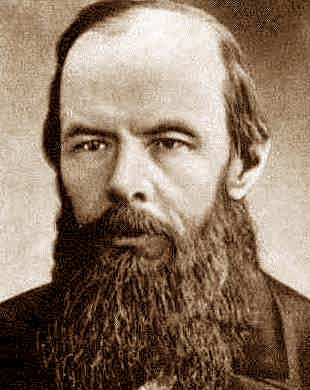
Do you have a favorite quote from literature? I have several, and this one from the pen of Fyodor Dostoevsky is by far my favorite.

Fear nothing and never be afraid; and don't fret. If only your penitence fail not, God will forgive all. There is no sin, and there can be no sin on all the earth, which the Lord will not forgive to the truly repentant! Man cannot commit a sin so great as to exhaust the infinite love of God. Can there be a sin which could exceed the love of God? Think only of repentance, continual repentance, but dismiss fear altogether. Believe that God loves you as you cannot conceive; that He loves you with your sin, in your sin. It has been said of old that over one repentant sinner there is more joy in heaven than over ten righteous men. Go, and fear not. Be not bitter against men. Be not angry if you are wronged. Forgive the dead man in your heart what wrong he did you. Be reconciled with him in truth. If you are penitent, you love. And if you love you are of God. All things are atoned for, all things are saved by love. If I, a sinner, even as you are, am tender with you and have pity on you, how much more will God. Love is such a priceless treasure that you can redeem the whole world by it, and expiate not only your own sins but the sins of others. (Brothers Karamazov, Bk II, Chapter III; Source)
Instead of tagging folks, I'll just wait for others to jump in. All I ask is that you link to this post so that those who visit here can then easily go to your blog.

02 November 2006

"Turn to the Lord!"

[A] common turning to the East during the Eucharistic Prayer remains essential. This is not a case of accidentals, but of essentials. Looking at the priest has no importance. What matters is looking together at the Lord. It is not now a question of dialogue, but of common worship, of setting off towards the One who is to come. What corresponds with the reality of what is happening is not the closed circle, but the common movement forward expressed in a common direction for prayer....

In this way we obey the ancient call to prayer: Conversi ad Dominum, "Turn to the Lord!" In this way we look together at the One whose Death tore the veil of the Temple -- the One who stands before the Father for us and encloses us in His arms in order to make us the new and living Temple.

Pope Benedict XVI
The Spirit of the Liturgy

29 October 2006

Statement of Resignation

Today I resigned as the Pastor of Zion Evangelical-Lutheran Church of Detroit. What follows is the "Statement of Resignation" that I read to the members who attended the semi-annual meeting of the Voters of Zion Church. The Reverend David Stechholz, President & Bishop of the English District, presided at the meeting as well as the Holy Mass that preceded the meeting.

When I became Pastor of Zion Church more than 11 years ago, my intention was to remain at Zion until death or retirement. That is still my heartfelt and sincere desire. However, with much grief and heartache, I have concluded that I must tender my resignation as the Fifth Pastor of Zion Evangelical-Lutheran Church of Detroit.

I tender my resignation because I no longer confess the teachings of the Lutheran Church as these are understood by those who have pledged themselves to the Book of Concord. Zion wants to be a Lutheran congregation. The members of Zion rightly expect their Pastor to be Lutheran—a man who holds unreservedly to the Book of Concord as a true and correct interpretation and understanding of the Holy Scriptures. I can no longer do so.

When a man pledges himself to a confession, he doesn’t get to pick and choose which parts he’ll abide by and which parts he’ll ignore or go against. Most of the Book of Concord is true and correct, and for that God is to be praised. However, I am convinced that the Book of Concord contains defective or deficient doctrines not in accord with the faith of the apostles. In simple terms, these deficiencies include the acceptance of an amended Nicene Creed, the notion that Jesus died to appease His Father’s wrath, a man-centered understanding of the church, the denial of prayers to the saints, and the idea that the liturgy is a man-made product. In addition, there are correct Scriptural teachings in the Book of Concord that are denied in practice by nearly all Lutherans today. These include the teachings that the saints do intercede for us, the affirmation of the perpetual virginity of Mary, the proper respect due the elements in the Lord’s Supper, and the scriptural mandate that only ordained men should celebrate Mass and give the Sacraments. Because of these deficiencies and errors, I can no longer confess and teach from the Book of Concord. Therefore, I cannot be the pastor of any Lutheran congregation.

Now I need to be clear about one thing: I am not resigning because of something someone at Zion has said or done. No one has asked for my resignation. No one has pressured or threatened me to make this decision. On the contrary, you have all been patient and kind with me—even as you saw me struggle. Therefore, I shall always genuinely appreciate and be eternally grateful for the love and the generosity that you have showered upon me and my family during my tenure as your Pastor. I am also deeply grateful for the support you have given me since I first announced my struggle more than 3 years ago. Because of this, I will always have a place in my heart for the people of Zion. This is the parish, and you are the people, I will always love.

I also sincerely appreciate the respect you have shown me as your Pastor. Your respect was evident when I first visited Zion, and that was one of the key things that drew me to you. I also respect you, and so I respect your desire to remain Lutheran. Yet for that reason, I must depart. As I do so, I heartily apologize to any I have hurt, offended, or caused to stumble in the faith during my 11 year tenure as the Pastor of Zion. By your prayers and the mercy of God, may I be forgiven.

As many of you know, the catalyst for this decision was the heart-rending realization that The Lutheran Church—Missouri Synod is an heterodox communion fellowship, and that it has no desire to be otherwise. The Scriptures clearly prohibit Christians from being in communion with those who deliberately, persistently and willfully deny and depart from the apostolic tradition enshrined in the Scriptures. The fact that many of you, over the years, have come to Zion seeking shelter from the false worship and false teachings in LCMS churches is evidence enough that we live in a false communion. And the fact that what is taught and practiced now in LCMS churches would be unrecognizable and, in fact, abhorred by those who composed the Book of Concord, and by the founders of this parish, is also evidence enough.

Please know, however, that the troubles in the LCMS are not the reason for my resignation. If I was leaving because the Missouri Synod is in trouble, I would be leaving for all the wrong reasons; I would be running when I should be protecting you; and I would be showing you great disrespect.

I tender my resignation because, over time, I have come to see and believe that the faith believed, taught, confessed and lived in the Orthodox Church is the faith of the apostles. Therefore, I sincerely believe that the Orthodox Church is the true visible Church of Christ on earth. For this reason, my family and I will seek to be received into communion in the Orthodox Church.

Your new bishop recently asked me what core issue motivated me to embrace the Orthodox Faith. It is this: The Liturgy never changes. I don’t mean that chants or prayers or feasts are not added or subtracted gradually over time. What I mean is that no priest or bishop or congregation can decide to cut the Eucharistic Prayer or go with a new style of worship or change things to suit his convictions or the times. Why? Because the liturgy is not something smart men have created and so can modify. The liturgy is from the Holy Spirit in the same way that the Scriptures are from the Holy Spirit. In the liturgy, the Holy Spirit rightly instructs us in Holy Scripture and His presence transforms us and the gifts set forth in the Holy Eucharist. So the liturgy is the way the Faith is given, confessed, prayed and proclaimed. As the liturgy goes, so goes the Faith together with your certainty and surety.

Bad bishops and aberrant priests have and will always surface in the true Church. From time to time, they introduce novel and heretical teachings. But if the liturgy doesn’t change, then their faith-destroying words will not take hold and will eventually fade away. The bottom line, then, is that the unchanging liturgy keeps us on the straight and narrow. It keeps us both on the way to the Kingdom, and in the Way which is Our Lord Jesus Christ. And the Kingdom of heaven is the goal, and the Lord Jesus is our Life.

I sincerely believe that what I am doing is good and right not just for me and my family. I am convinced that it is good and right for each one of you. I sincerely believe that the Faith you’ve been taught here in this place for 125 years is lived and believed in its fullness in the Orthodox Church. Therefore, I deeply long for each of you to join me precisely because I have been your spiritual father. You have trusted by ministry, teaching and counsel these past 11 years, and I wish you would trust me in this as well. Some have indicated that they will do just that. I am moved by their confidence, and will do all I can not to betray their trust. But a good spiritual father should never force or manipulate any of his children to believe as he does. In addition, my own struggles have taught me to acknowledge and respect that each person must reach this decision on his own, in his own time.

Because of my deep love and respect for you, I pledge to you this day that I have not and shall not proselytize or recruit away those who desire to remain members of Zion. I will always be pleased to answer any questions you may have, and I will continue to speak the truth in love. But I will never urge you to act against your conscience because that is not our Father’s way, and that is not the way of His Church.

Already I have heard that some people are telling lies about Zion and what I am doing today. In the coming weeks and months, some here and elsewhere will say that I’ve turned against the true Faith, that I’ve betrayed my vows to the Confessions and to you, and that I have been deliberately deceitful. Some will say that the pledge I just made about not recruiting members is a lie. Some will say that some or all of my tenure at Zion has been a lie. And some will say that Zion has never been very Lutheran and needs to change how she’s worshipped and what she’s been taught during the last 67 years.

If you permit me, let me tell you that when you hear these things: do not be afraid, do not be discouraged, do not become bitter or angry, and do not fall into sin. Instead, hold fast to what is true and good and right. And above all, hold on steadfastly to the mercy of God. He will never leave you nor forsake you. He is the loving Father, and so He will always embrace those who come to Him.

I also urge you not to believe those who would question the Gospel and sacraments you have received from me. I have given what I have received. And despite my many failings and the failings of the Synod, the Gospel you have received here in this place is the wondrous, loving, merciful work of the Holy Spirit.

I am grateful for every blessing of the Holy Spirit that I received in the Lutheran Church—most especially for the gift of Holy Baptism, for a rigorous catechesis in many basic doctrines, for the Holy Eucharist that has nourished my faith, and for the grace to serve three parishes. I am also grateful for your prayers; for your words of admonishment, rebuke and encouragement; and for your friendship—which I do not intend to abandon. I am undeserving of every kindness that you have shown me. And although it may be more challenging for various reasons, I hope we continue to see each other in the years ahead.

Finally, although I am undeserving, I ask for your prayers—for me, for my family, for Zion, for your District President, for whoever succeeds me, and for the faithful in The Lutheran Church—Missouri Synod. Pray that our Lord have mercy. And pray that, despite our weaknesses and failings, we may together be restored to full communion with our Father through His Son Jesus Christ, in the Holy Spirit.

(Rev Fr) John W Fenton, M.Div., S.T.M.
The Fifth Sunday after Michaelmass
29 October 2006

25 October 2006

Three Remedies from St Raphael

Yesterday when I celebrated the Feast of St Raphael the Archangel, I read these words from St Bonaventure. Granted, he is a post-schismatic medievalist's medievalist; nevertheless, I found what he wrote very comforting. Below are excerpts, but I encourage you to read the whole of what the breviary provides.

Raphael by interpretation is : The Medicine of God. Consider therefore the three remedies bestowed upon us by Raphael which are, as it were, medicines to heal our sickness. First of all Raphael the physician would deliver us from infirmity of soul by inducing within us the bitterness of contrition. This is attested by the Book of Tobit, where we read how Raphael telleth Tobias to anoint his father's eyes with gall ; and how, when it was done, Tobit did see. Could not Raphael have done the anointing himself? Nay, for an Angel cannot give repentance, but only shew the way thither. ...

Secondly, Raphael would deliver us from the devil's bondage by putting us in remembrance of the passion of Christ. ...

Thirdly Raphael would deliver us from the wrath of God, incurred by sinning against him, and this he would do by inducing in us greater earnestness in prayer. Consider how the Angel Raphael, according to Chapter twelve of the Book of Tobit, said : When thou didst pray, I did bring the remembrance thereof before the Holy One. For in such fashion the Angels do all that they can to reconcile us to God. The devils are the fallen angels who accuse us before God. But the holy Angels excuse us, namely, when they bring before God those prayers which they have already stirred us up to offer more devoutly. ...

13 October 2006

My Season of Silence...

To every thing there is a season, and a time for every purpose under the heaven:

a time to be born, and a time to die;
a time to plant, and a time to pluck up that which is planted;
a time to kill, and a time to heal;
a time to break down, and a time to build up;
a time to weep, and a time to laugh;
a time to mourn, and a time to dance;
a time to cast away stones, and a time to gather stones together;
a time to embrace, and a time to refrain from embracing;
a time to get, and a time to lose;
a time to keep, and a time to cast away;
a time to rend, and a time to sew;
a time to keep silence, and a time to speak;
a time to love, and a time to hate; a time of war, and a time of peace.


Ecclesiastes 3.1-8