23 July 2006

Reflections on an Anniversary

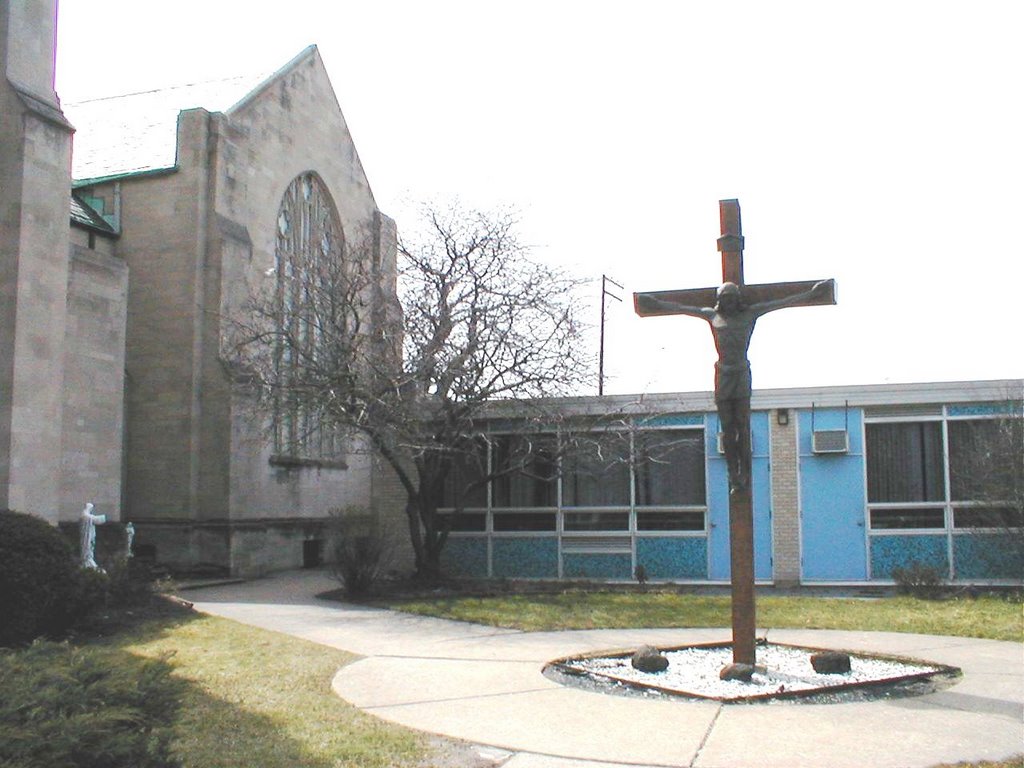
On this day in 1995 I was installed as the Fifth Pastor of Zion Church. So it's an anniversary of sorts.

I must admit that, personally, it is a rather bittersweet anniversary. What is sweet is way Zion has embraced me--and I them. It is better than I could have imagined when (with no little trepidation) I moved my family to Detroit eleven years ago. Zion's kindness, love, affection, longsuffering, and generosity seemingly knows no limits.

Our relationship is as it should be--familial. Since the beginning, they have honored me by calling me "Father," and never once have they been taken aback when I have addressed them as "my beloved" or "my little children." Even in the midst of the few squabbles (which, truly, have been few and far between), that mutual love has never dissipated. I have tried hard to show them the same respect they have consistently shown me, and fear that I have failed to live up to the standard they have set.

This is the sweet, and for it they will ever be the parish I will always love.

But in this life, with the sweet often comes the bitter. What has been most bitter has nothing whatsoever to do with Zion or the people of Zion. Rather, it has to do with where Zion lives and swims.

From our vantage point, we have seen the continued disintegration of both the city we call home and the synod we call our own. Both have disintegrated in ways I could not have envisioned or even imagined 11 years ago. For, when I moved here, it seemed that Detroit was in a renaissance and the LCMS was returning to faithfulness.

Regrettably, Detroit is no longer in a renaissance. Despite much talk and some good efforts, while the downtown looks better, the neigbhorhoods have gotten much worse. The biggest decline is in basic city services--the most basic being police protection. The reasons for decline are too numerous and too complex to list, but surely it is not helped by selling the city's future and soul to casinos coupled with a mentality of impoverishment and a governmental structure that, by its very nature, resists neighborhood improvement.

More devastating than the decline of city is the ruination of the LCMS. Like modern day Detroit, the LCMS has always been structurally unstable. It began as a coalition between two disparate groups in the attempt to revive confessional Lutheranism. On the one side were the Saxons, led by C. F. W. Walther, which attempted a repristination of the era known as "Lutheran Orthodoxy." On the other side were the Bavarians, sent by J. K. Wilhelm Löhe, which attempted a return to a liturgical confessionalism. In the intervening years, both groups have been overrun by what their leaders feared--American evangelical pragmatism. In the LCMS, this has resulted in a Lutheranism that has deserted any pretense to its catholic heritage, is essentially antinomian, and liturigically adheres quite ferociously to adiaphronism. Most devastating of all, however, is the abandonment of any meaningful ecclesiology.

Through the years, under the influence of her Pastors, Zion has manfully attempted to be a paragon of what a Lutheran congregation should be. In the process, it has attracted a small gaggle of admirers and an even smaller collection of imitators. Zion has also fended off any number of detractors and critics ("confessionals" or otherwise) who have been all too willing to attack or disparage its efforts. And so Zion has become little more than a symbol of what could be and, realistically, has devolved into an "experiment."

All of that was managable while the LCMS retained some semblance of liturgical integrity (or, at least, what passes for "liturgical integrity" in post-reformation "confessional" Lutheranism). However, the LCMS long since lost any such semblance and, predictably, the result has been an increasingly downward spiral into least-common-denominator protestantism. For Zion this means that, while it remains faithful as a parish and (one hopes) has grown in its catholic understanding, it has effectively become more and more isolated while remaining in fellowship with those who either wish its demise or tolerate its "eccentricities." The practical result is that very few members of Zion ever go elsewhere within the LCMS (either when they move or when they vacation), and if they do so out of loyalty, they feel deprived if not cheated.

These observations could be passed off as nothing more than the disappointments of a parish priest who struggles with bearing the cross were it not for the fact that he and his parish remain in communion with those who have, at the least, abandoned their heritage or, at the most, slidden into heresy. For unlike Detroit, the problems in the LCMS have declined beyond matters of discipline and basic services. At least, that's how it looks as this priest ruminates on this day--which makes the anniversary ever so bittersweet.

19 July 2006

Defining a Church Father

To some, a "church father" is a commentator (ancient or otherwise) whose commentaries they prefer. To others, the appellation "church father" defines those (orthodox or not) who lived within a certain era. To still others, a "church father" is one who reflects, to a greater degree, the church's "tradition" (depending, subsequently, on one's understanding of "tradition").

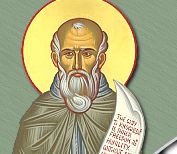
In Ambigua 7, St Maximos the Confessor offers what I find to be one of the better definitions of "church father." He designates them as "our fathers who are wise from hearing the Scriptures read in the divine mysteries."

This definition does not suffer from the limtations of "favorites" (favorite era, favorite comments, favorite theology). Rather, it places our definition squarely within the locus of tradition; namely, the Divine Liturgy or Holy Mass, where dogma is lived in prayer. St Maximos' definition also has the advantage of reminding us that piety by attention to the Divine Liturgy is the distinguishing mark of a saint--which a "church father" should be.

01 July 2006

The Pope & Liturgical Reform?

A reader of this blog recently pointed me to this blog. It is "dedicated to promoting the New Liturgical Movement called for by Cardinal Ratzinger/Benedict XVI in all the sacred arts and in the unity of legitimate liturgical diversity." New Liturgical Movement, as you can gather, actually refers to the restoration of the older liturgical movement as indicated by the title of the book (Reform of the Reform?) by a Fr. Thomas Kocik, one of the blog contributors.

I've not yet had the opporunity to read through many of its posts, but I shall. What I found most intriguing, thus far, is this contribution from Thursday. It seems to dovetail with this news item from another reader of this blog.

My hopes for the current are bouyed by such things.

19 June 2006

Part Two: The Church Must be Visibly Present

As miraculous, incredible and wonderful as it sounds, Our Lord Jesus Christ is not content to present Himself to us in only one way (mode). Rather, by the Holy Spirit, we know that He is present to us in at least three ways.

The first way is His physical presence. This occurred when the Holy Spirit overshadowed the Virgin Mary so that she conceived in her womb the Son of God. Our Lord’s second way is His sacramental presence. By the Holy Spirit, Jesus Christ unites Himself (both His divine and human natures) with bread and wine. The third way Our Lord presents Himself to us is His ecclesiastical or churchly presence. This presence also occurs by the Holy Spirit. He unites the faithful together into one communion in Christ’s mystical Body. So two distinct things are combined: Our Lord Jesus and all believers. He is the Head and we are His body.

Just as with His physical and sacrament presence, so also in His ecclesiastical presence Our Lord’s Body is two natures in one Person. For the Church, these two natures are an historical, institutional nature which everyone can see and point to; and a mystical nature which we can see and confess only by the grace of the Holy Spirit. For we are members of His Body—and not of some spiritualized body which no one can see.

The point is that Our Lord presents Himself in outward, manifest ways which men—imbued by the Holy Spirit—can point to and say, “This is the Body of Christ.”

Furthermore, the Lord’s three presences are not separate but interdependent. One could say that they share a perichoretic relationship. His physical presence makes possible His sacramental presence. And His sacramental presence makes possible his churchly presence. For we see Our Lord’s churchly presence most clearly and distinctly at the altar—when the Body of Christ (churchly presence) gathers to feast of the Body of Christ (sacramental presence) which suffered, died and rose for our justification (physical presence).

Yet one parish's particular altar does not exhaust or complete the definition of Our Lord’s churchly presence. If it did, then Jesus would be confined to one place. Or, if He did appear in other churches, then He would be split into many bits all over the world; or He would be duplicated and reproduced. But because of Our Lord’s ascension, the entire Lord Jesus is present sacramentally at every altar. Based on this sacramental miracle, and for the same reason, Our Lord is present not only in one church but across many churches.

Therefore, we ought not simply point at one congregation and say, “This is the Body of Christ.” We also ought to point at a group of congregations—churches in communion fellowship with each other because of Christ’s sacramental presence—and say, “This group of churches, this communion fellowship, this institution is the Body of Christ.”

So Our Lord’s churchly presence is not unlike His physical or sacramental presence. Because Our Lord took flesh, we can and must point to Jesus and say, “This man is God.” Because of Our Lord’s Word and Spirit, we can and must point to the consecrated bread and say, “This bread is Christ’s Body.” In the same way, we can and must point to a communion fellowship that holds to the true faith and say, “This is the Body of Christ—God’s church on earth.”


Condensed and slightly revised from "Addendum III."

Part One: The Church Must be Visibly Present

St. Augustine was not primarily talking about the Eucharist when he said that Jesus "commended to us His Body." Instead, this venerable saint was referring to the holy catholic Church. For, as St. Paul says, the Church is the Body of Christ and Christ Himself is its head (see Romans 12 & 1 Corinthians 12).

Clearly for St. Paul and St. Augustine, "Body of Christ" is not metaphorical; and it is not a fancy way of talking about "church." Rather, this phrase describes yet one more aspect of Our Blessed Lord Jesus. To say it simply, the same Body which was born of the ever-Virgin Mary; the same Body which suffered death on the cross and was raised from the dead; the same Body which we consume at the altar during Holy Communion—that same Body is the Church. Into that Body we were incorporated through Holy Baptism, and apart from that Body we cannot live the Christian life. For Jesus says, "Apart from Me" (that is, apart from My Body) "you can do nothing" (John 15.5; see also Psalm 16.2).

Since the Church is the Body of Christ, it would be heretical to say that this Body is only invisible and has no visible form. For Our Lord Jesus, who became flesh for our sakes, is not invisible now. His ascension did not mean the removal of His human nature—His flesh and bones. Neither did it mean that He simply became invisible. For, unlike the angels, one of the chief characteristics of our bodies is that they can, and will always, be seen. In fact, that is a chief aspect to us being made "in the image of God." For Christ is the image of God; which means that He is the only visible, tangible Person of the Trinity that becomes creature; and we are made in His image, which means our visibility conforms to Him, and not Him to us.

So when Our Lord ascended, His body did not vanish or get taken off. Rather, it was gloriously transformed. And this was done for two reasons: first, so that we could be united in Him (baptism) and Him in us (Eucharist) by the Sacraments. And secondly, so that He—the virgin born—could be visibly present throughout the world in His Church.

This is profound, and not easy to understand. However, it is important to our understanding of "church." For we might tempted to believe that the church is defined strictly in human terms—an assembly of believers. But St. Paul and St. Augustine urge us never to forget that the primary definition and understanding of "church" is rooted in Christ. It is His Body, not our association. And it is His Body, not merely a group of people who believe and practice the same thing.

Because this is hard for us to understand and remember, the danger is that we flay Jesus' skin from His Body, and think and talk only in terms of an "invisible church" or "a unity that cannot be seen." But if Our Lord Jesus is still in His flesh, and if the Church is His Body, then His Church must be visibly present—visible even to the eyes of the unbelievers. (For remember, even the unbelievers saw Jesus with their eyes, although they did not see or confess Him as the Christ.)

The question, now, is "where is Christ's Body the Church visibly present"? Or, to use St. Augustine's words, where does the Body He commended to us continue to lie?

We Lutherans are in the habit of saying that Our Lord's Body continues to lie where the Word is purely preached and the Sacraments are rightly given. But, historically, a more "meaty" and "fleshly" answer is this: the church is the communion fellowship between those pastors (bishops and priests) who hold steadfastly to the Jesus who is both God and Man, sacrificed on the cross and now given from the altar.

If that communion fellowship between the pastors is broken by false doctrine or false worship, is that any longer the holy and glorified Body of Christ?

And is one member or portion of that Body in danger if it remains in a communion fellowship with pastors who deny the Faith once delivered?

From the latter part of "Addendum IV."

All of Us are Beggars

A friend of mine, who is a Serbian Orthodox priest in Montana, once gave me The Prologue of Ohrid. It is a handsomely bound, two-volume work intended for personal devotion for Eastern Orthodox laity and clergy. It is arranged according to the Byzantine rite liturgical year, and for each day of the year contains hagiagraphies of the saints for that day, a "Hymn of Praise" composed often by saints, a reflection, an aid to contemplating particular Scriptures, and a brief homily.

I really don't look at it that often. As I wrote, it follows the Byzantine calendar and so the feasts of major saints are on different days than what is customary in the West; the many minor saints are unknown to me; and the hymns are not metrical (as I'm used to), but poetic meditations.

However, today I happened to pick it up just to see what was listed for June 19. On the opposite side was the homily for June 18 which, coincidentally, touches on the themes from yesterday's Gospel. Here is that homily.

The poor man who begs and the rich man who gives--both make the Lord their debtor, but only under the condition that the poor man begs in the name of the Lord and with humility and that the rich man gives in the name of the Lord and with compassion. Everyone who receives should know that he receives that which belongs to God, and everyone who gives should know that he gives that which belongs to God. Such giving has a price and such receiving has a price. All of us enter this world naked, and naked we shall leave this world.

All of us are beggars before the Lord, for we possess nothing that we have not received from the Lord. Therefore, give to the poor man as God has given to you. You take what is another's and you give to your own when you give alms. The poor man is closer to you than all of your goods, just as to God, the Creator of all men, every man is incomparably more precious than all of his goods.

If you have been given riches, they have been given to you for temptation: that your heart be tempted! That God and all the heavenly hosts might see whether you have understood whence are all your riches and why they were given to you. Blessed are you if you know that your goods are from God and belong to God! Blessed are you if you consider the poor as your companions, as members of your family, and share with them that which God has entrusted to you!

Oh, how immeasurable is God's love for mankind! Behold, all that you have belongs to God, and yet God considers Himself your debtor if you take from Him and give to the poor, and He will repay you for your good. What kind of mercy can be compared to this?

O man-loving Lord, open our minds to understand the mystery of Thy mercy, and soften our hearts like wax, that as wax they may burn and shine with the reflection of Thine inexpressible mercy!

To Thee be glory and praise forever. Amen. (Source)

NOTE: The Prologue of Ohrid is online.

18 June 2006

The Mass is All I Have

The Mass is all I have, because it is all I need in order to live.

That’s what the Christian says, because that’s what the Christian believes.

Now, I’ll grant that it sounds radical—like a gross overstatement. It certainly sounds pious, but it also sounds like it steps beyond all notions of reality—like an escape from the real world into some super-religious world of zealots and fanatics. But before you dismiss that little sentence, consider what it says.

The Mass is not simply some ritual, some spiritual exercise that you go through because that’s how you were raised. When you boil it down, the Mass is two things—the deliverance of Jesus Himself in word and in deed. In the preaching, the Spirit delivers the actual words of Christ into your heart and mind. And in the Blessed Sacrament, the same Spirit delivers the true Body and Blood of Christ into your flesh and bones.

Both those things—the Lord's Word and the Lord's Supper—go inseparably together. If you hear but don’t receive, or if you receive but never hear, you’re getting half of what Our God and Lord gives in the Mass. Now some may honestly believe that half is good enough. But it’s only half—half of Our Lord, because it is half of the way He delivers Himself into you.

The Mass is all I have means that the Mass is all the Lord gives in answer to your prayer. You pray “Give us this day our daily bread, forgive our sins, lead us not into temptation, deliver us from evil—protect, strengthen, guide and comfort us.” A fine prayer, indeed! And where does Our Lord answer it? At the Holy Mass. And to what extent does He answer it there? Fully, completely, without short-changing you one bit.

The Mass is where the Lord daily loads you with benefits. For what is better than the Lord’s forgiveness and compassion? And what is better than being so intimately united to God that He comes and makes His home in you? He dwells in you, and you dwell in Him. That doesn’t happen in the signs you look for, or the feeling of God’s presence that you get. That happens nowhere but at the Mass. For there, and only there, is where He ties Himself to you.

When you push it further and say The Mass is all I need in order to live—now you’ve said that nothing else in life matters. Not only because everything else pales in comparison, or because life is not worth living without God’s love in Christ. But primarily because your life—and all life of whatever kind—depends solely and entirely on that love of God delivered into your very being. Without the Lord’s mercy delivered in the Gospel preaching and Gospel Sacraments, there is no life—for you, for the world. Without the Mass, nothing exists!

Isn’t that what Jesus says when He calls Himself the living Bread of Heaven and then says, “The bread that I shall give is My flesh, which I shall give for the life of the world”? And, just so you understand, He pushes it one step further when He adds, “Most assuredly, I say to you, unless you eat the flesh of the Son of Man and drink His blood, you have no life in you.”

The Mass is all you need to live. That’s what Our Lord is saying. And He says it not as a theory or a spiritual truth. He says it to you, as the only truth worth believing. In fact, He says it so plainly and bluntly that, if you turn your back on it, you revert to hellish living and, ultimately, hellish death.

And so what else can you say in response to what Our Lord says? The Christian has only one thing left to say:

The Mass is all I have, because it is all I need in order to live.


First published in the Zion Trumpet, the official newsletter of Zion Evangelical-Lutheran Church of Detroit.

Two Statues

In 1975 & 1976, the following two statues were installed at Zion Evangelical-Lutheran Church of Detroit. They were custom made in Italy and donated by parishioners in memory of loved ones. They grace two alcoves in the Nave designed in 1933 with, I'm sure, no thought that statues would one day appear. Since their installation, both stations have been used as places of prayer.

These statues are known as either the Madonna or Theotokos statue, and the Christus or Christos statue. As one might imagine, the former induces quite a number of comments from those who question the propriety of its appearance in a Lutheran Church. However, it has caused no consternation among the parishioners of Zion, who have been carefully catechized concerning the veneration of the pure, holy, ever-Virgin Mother of God.

NOTE: Here are more photos of the interior of Zion Church.

17 June 2006

Optional Orandi begets Proscribed Credendi

With reasoned voice, a friend of mine has offered a perceptive diagnosis:

Lutheranism has a lex credendi (rule of faith) but no lex orandi (rule of prayer). Anglicanism has a lex orandi (Book of Common Prayer), but no lex credendi (anything goes, doctrinally speaking). Orthodoxy and Roman Catholicism have both a lex credendi (Tradition) and a lex orandi (the Liturgy). Lutheranism has a great lex credendi (Book of Concord) but no actual lex orandi (all in the name of "liberty," of course).


He then concludes:

The liturgical and practical instability of Lutheranism flows out its reticence to define dogmatically its rule of worship in the way of a received "holy tradition." This is why Lutheran practice frequently comes unbuckled from Lutheran doctrine. It relies on paper subscription to a book without practical adherance [sic] to any liturgical or practical norms.


One evidence of this is in the liturgically-schizophrenic LCMS where the Commission on Worship, as it finishes an extensive nine-year service book project, has now begun "a process leading toward the development of diverse worship resources." With astounding and lamentable words, a member of the Commission proves my friend's point:

[We] will not talk much about traditional worship, but a diversity of worship approaches and styles. We want to help the church define what worship is in general, to help people discover what is Lutheran about worship. And, to that end, we want to identify material that will lead us to that.

Yet this raises what, no doubt, is the obvious question. In the Lutheran Church, is there such a thing as a lex credendi regarding not just what the orandi means (i.e., "theology of worship"), but also how liturgy is to be done? In other words, doesn't "liturgical theology" involve the way one prays (as well as what is left unsaid or said vapidly) and not just the doctrinal soundness of the words used?

What my friend doesn't say--perhaps because it is too painfully true--and what is categorically denied by the Commission member, is that lex credendi and lex orandi are of a piece. And if one must rank them, it is the lex orandi that inevitably shapes the lex credendi. Most people, of whatever religion or liturgical stripe, instinctively know this. Otherwise they would not be so upset over changes in their way of worship (or customs and traditions).

To say it another way, the pithy condensation of Prosper's famous dictum is not intended to suggest hopeful ingredients for sustainable, stable church practice. (And I don't think my friend suggested that.) Rather, it indicates that dogma that is not reverently prayed is paper-faith; and whatever is prayed becomes the true dogma or, if you will, the interpretive norm for the paper-confessions.

The genius of my friend's comment, then, is that he has exposed not a point of instability in Lutheranism which needs, somehow, to be shored-up and strengthened. Whether he knows it or not, my friend has exposed the fatal flaw which exists in Lutheranism as much as it exists in Episcopalianism; namely, the rending of lex credendi from lex orandi. This flaw has existed from the beginning of the Reformation. One might say it was then no more than a simple virus; but now, thanks in large part to a combination of ignorance, undiscipline, pride, and weak-kneedness, it has left its patients' stubborn adherents frenetically minding monitors that announce impending death, all the while hysterically lashing out at doctors, nurses, aids, friends, or anyone else who happens by the death bed.

Which is all a lengthy way of amending yet another lex coined by a former vicar of Zion: "Where historic liturgy is optional, historic faith will sooner or later be proscribed."

16 June 2006

The Tree of Life

Because of the Lord’s great and abundant mercy, Adam and Eve did not die immediately and instantaneously. Communion in God had been broken, but the Lord graciously and mightily held back the power of death. Death now entered into the world, but not at this moment—for in this moment the Lord snatched his infantile creatures from the jaws of death and from the gates of the grave. And then Our Father devised a plan and made a way of escape. He fashioned death into His instrument for restoring life, and called on His Son, by the Spirit, to blaze the new path from the garden through the wilderness and back into paradise. This way of escape requires tasting death and meeting the grave. Yet when that path is entered upon in true faith, communion in God is fully restored.

But what about the Tree of Life? The Lord God drove man out of the garden—“lest he put out his hand and take also of the tree of life, and eat, and live forever.” Does this mean that the Tree is gone, that its fruit is withered, and that the life it once offered is no longer available? By no means!

The Tree of Life still bears fruit—and that fruit is the food for our journey from this life to the life of the world to come. And now here is the great mystery. The Tree of Life in the Garden of Eden is Our Lord Jesus Christ—the same Lord Jesus who speaks plainly to us in today’s Gospel. Today He says that He is the Bread of Heaven which a man must partake of in order to have true life. For He says, "My flesh is food indeed, and My blood is drink indeed. He who eats My flesh and drinks My blood abides in Me, and I in him."

And so you see—the Tree and its fruit is not gone. Rather, for our sakes it has been wondrously, mercifully transformed. The fruit it offers is the flesh and blood of Christ—which is now given for us to eat and drink in the Blessed Sacrament. So the life that the Tree promises is offered anew—but in another form.

An excerpt from the Corpus Christi sermon preached at Zion Evangelical-Lutheran Church of Detroit.